
The Vikings
Quite a few English words owe their existence to the Icelanders, or more strictly speaking, the Vikings who landed here at the end of the 9th century. We would not be going berserk, making blunders, eating cake, being happy or even dying without their contribution.
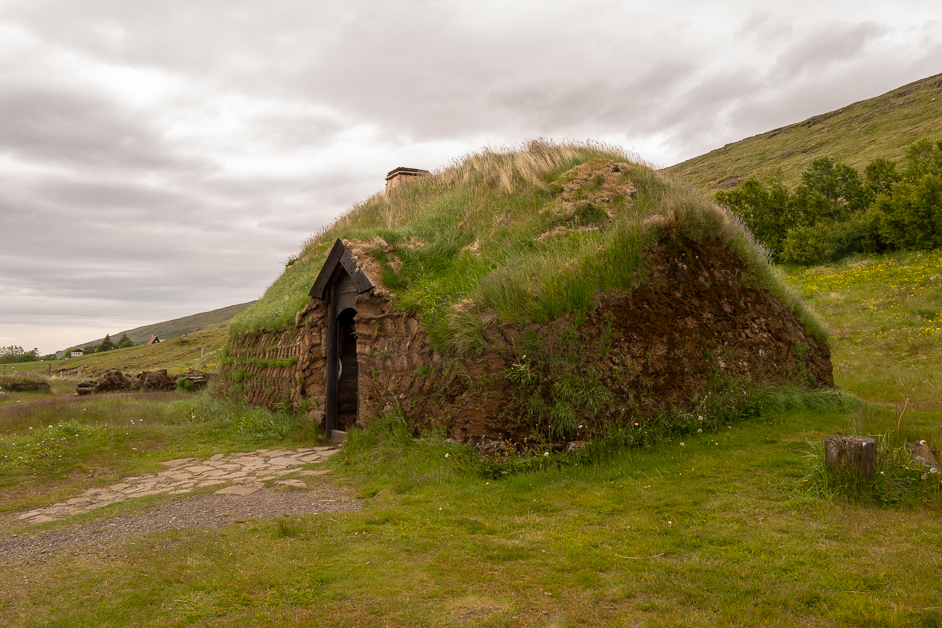
But the Vikings brought more than words. They also brought the clever clinker boat design. Whereas many early boats, like the Māori waka were crafted from a single tree, the clinkers were made of short overlapping planks of wood which created a strong and flexible hull but yet were light enough to be carried short distances on the shoulders of the crew. These were perfect for exploring and trading around these parts. Unfortunately the Vikings used most of the trees, mainly native birch, to make their boats and also to make charcoal to smelt bog iron ore. This left nothing to build houses with and so they used the bark from the birch to make a frame and then overlayed layers of turf, usually in a herringbone pattern. We visited a few of these semi-underground turf homes. One we visited was extensive with 35 connected rooms but the rooms were very small and I felt quite claustrophobic by the time I got to the end. I’m not sure how they survived such long winters living in cramped quarters.
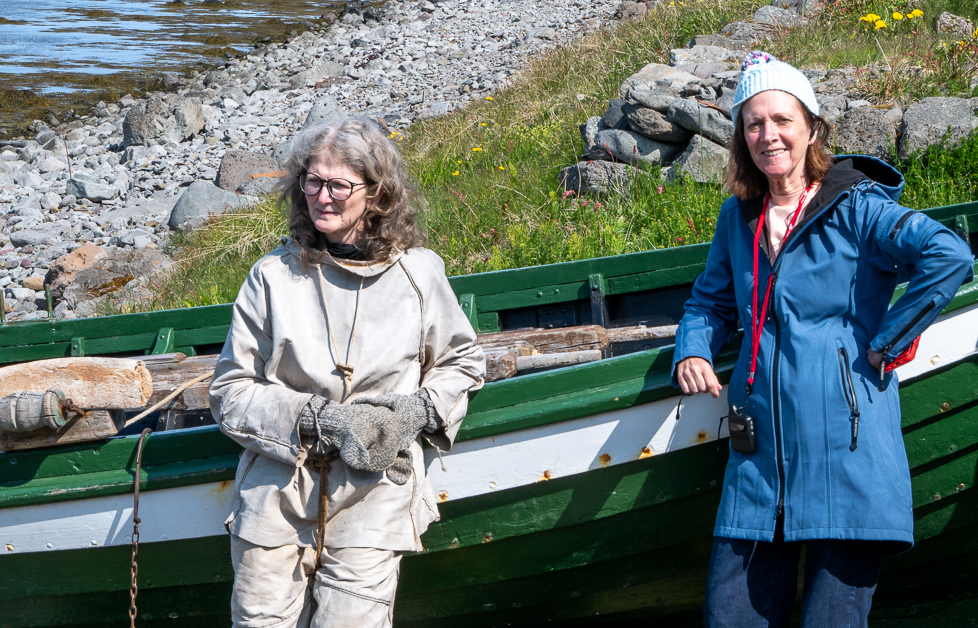
A highlight was visiting Erik the Red’s farm. We could just make out the site where his house had been. A nearby replica turf long-house is the basis of a talk about life back in Erik’s day, which we really enjoyed. We had to bend down on entrance due to the low doorway and after adjusting our eyes to the darkness – a small firepit the only source of light – we joined the other tourists who sat on 6 ‘beds’ along the wall, with Sophie the presenter in traditional viking garb, sitting behind the firepit telling Erik’s story. The beds were super short but Sophie told us they slept sitting up three to a bunk, hence the reason why beds have a headboard. Back in the day the headboards were inscribed with a prayer to be said on retiring. The lying-down type of sleeping as we know it today has only been in vogue since the mid 1800s!! Rather grateful for that.
The other aspect that was highlighted was the power that the matriarch of the family held. She was the only one who had keys to the pantry i.e. she managed allocation of the life sustaining food which was rarely abundant. Females were also free to divorce if unhappy with their lot and they retained their surname (although that was derived from their father’s given name with ‘dottir’ appended, ‘sson’ for boys).
The Herring Girls
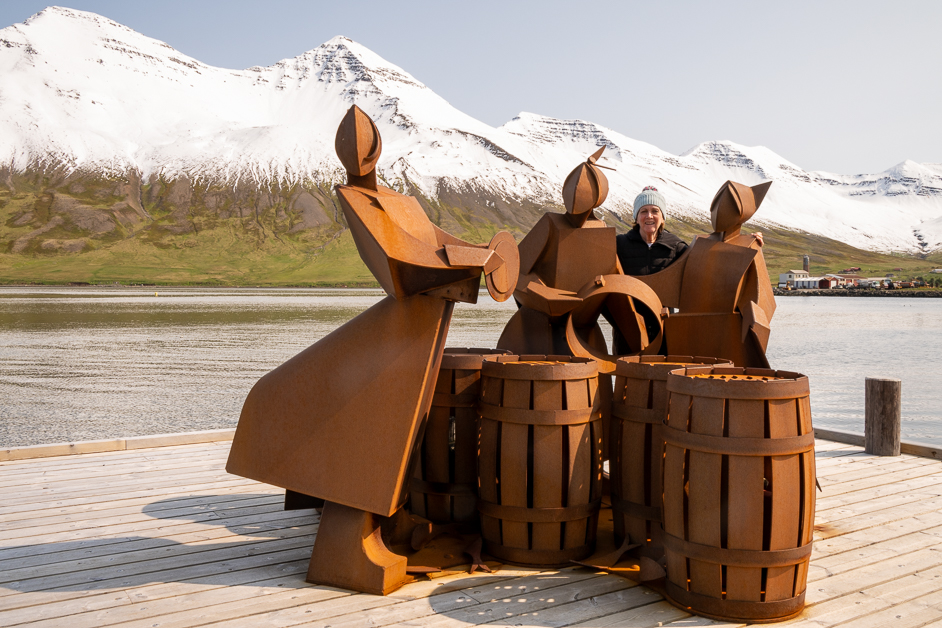
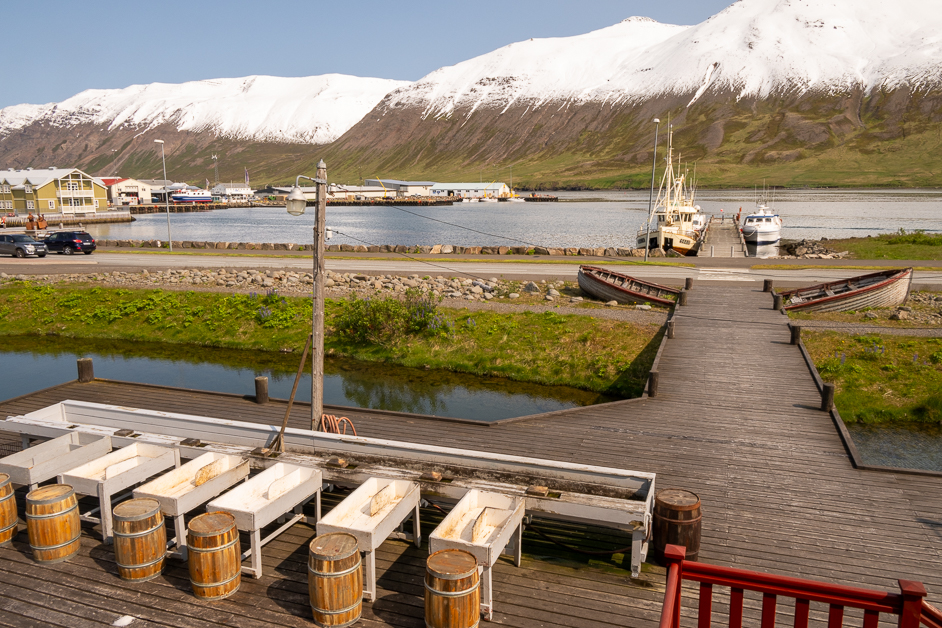
My favourite story from Iceland, and one I had no idea about before we visited, was also a story of female empowerment and it owes its origins to the oily herring. The fish became a staple in the Norwegian diet, mainly because it was abundant but also because it was a rich source of vitamin D – important in the sun impoverished country. They fished in summer and salted much of their catch to see them through winter. Once they’d over fished their own waters the Norwegians went in search of more herrings and found a very rich supply off the coast of the town of Siglufjordur in northern Iceland. Following the smart principle to process close to the source they set up local fishing and salting operations in Siglo (the towns nickname), the locals grateful for employment.
Soon there were more herrings than workers and the summer saw seasonal workers from across Iceland flock to the town. The industry peaked in the 1950s and 1960s and females were a key part of the workforce. They became famed for the speed at which they could salt a barrel, about 4 barrels an hour, 1000 fish per barrel. It was back breaking work and it was no 9 to 5 operation. When the boats came in the workers worked, sometimes 48 hours without a break. The difference in gender pay saw the men get paid by the hour while the females got paid by the weight of fish they salted. Needless to say the females soon became so quick that they were taking home more than the men and when this occurred management announced they were reducing the rate for women. Well! The females threatened to walk off the job. Management said they’d manage fine without them! So the women left town.
It took about two days for management to call them back, realising they had no hope without them. The females agreed to return on condition they got a pay rise! Which they did! They say this was the origins for Iceland’s reputation in gender equality. The World Economic Forum has ranked them number one in gender parity for 15 years running.
By the late 1960s the Iceland waters were also overfished and fisheries management had become a thing, managing stock numbers for the future. The Herring industry declined and the Siglo operation was closed. Five of the buildings have been converted into a series of museum displays and a cafe etc. The accommodation where the Herring Girls lived has been preserved and is fascinating. (They wore stockings to work!) It is clear that while the Herring Girls worked hard, they partied harder. It reminded me of my mining days. Hard work but great people and fun times.
The Viking and Herring heritage remains a core aspect of the Icelandic story and is a rich complement to the Fire and Ice experience.
[ngg src=”galleries” ids=”39,40″ exclusions=”724,714,720,722,713,725,727,730,731,697,698,700,704,696,707,708,709,711,705″ display=”pro_tile”]